

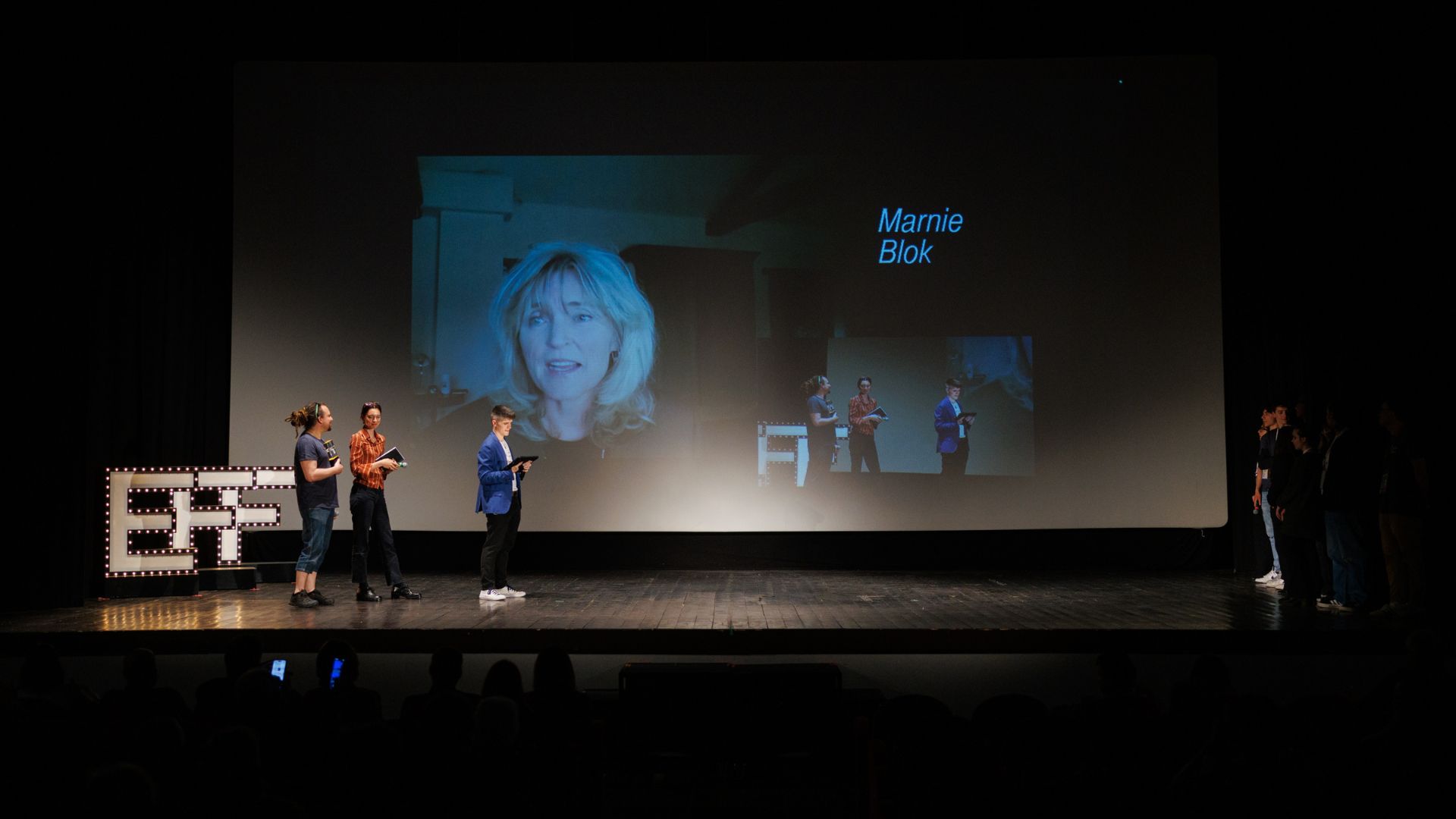
The eleventh edition of the Ennesimo Film Festival has come to a close. Below are the full texts and official motivations from the Official Selection Jury and the Artemisia Jury, which determined some of this year’s Official Selection Awards.
Can’t remember who the jury members were? Take a look here!
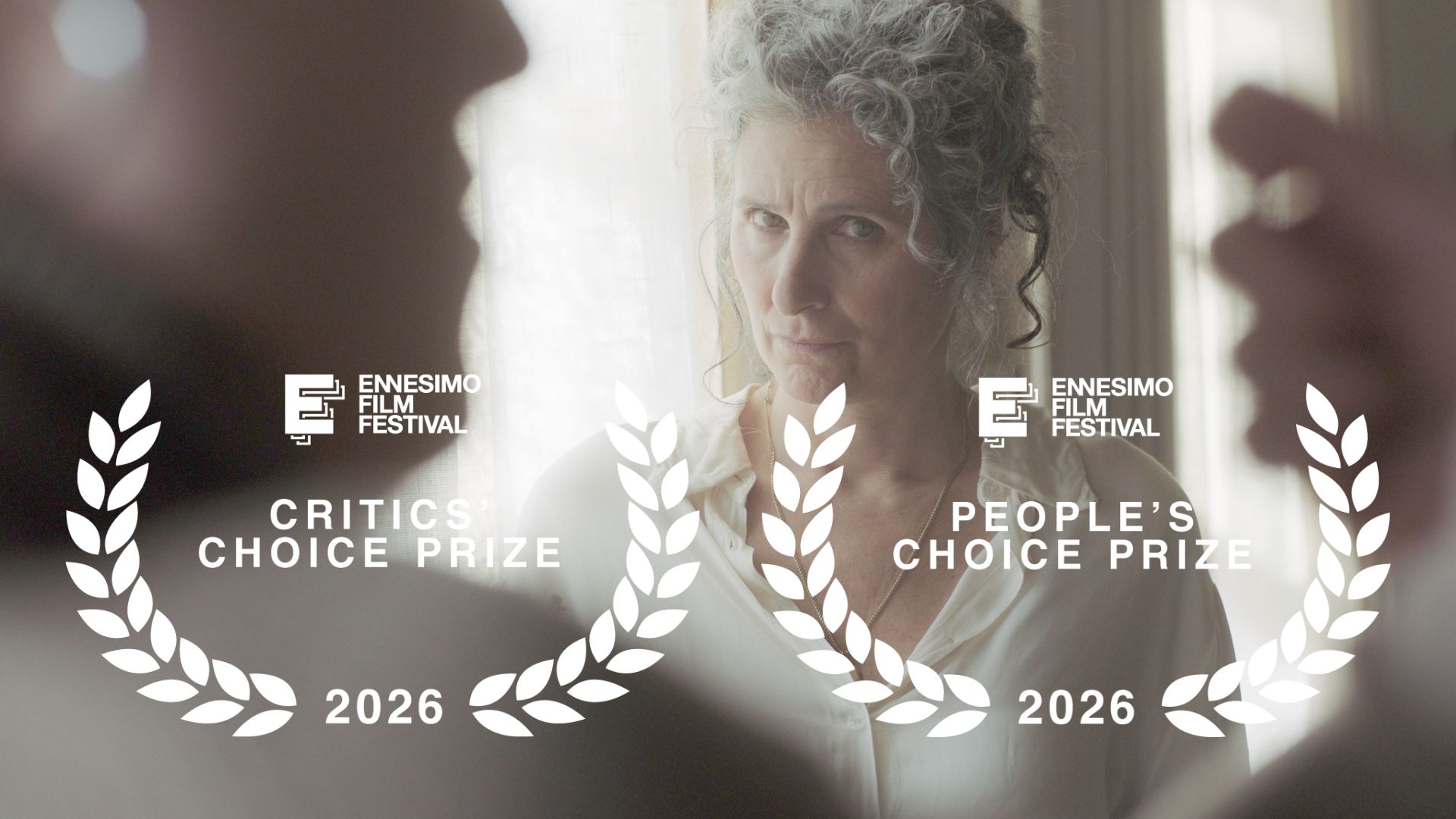
The Award for Best Short Film EFF 2026, presented by the Ennesimo Official Jury, went to:
For its sophisticated and impactful approach to an important and often-ignored topic; for its economy of language that manages nonetheless to bring to light complex nuances and raises urgent issues; with its sensitive writing that avoids stereotypes and clichés, supported by three powerful performances by the protagonists.
The film by the Dutch director also won over the theater audience, securing the EFF 2026 Audience Award.
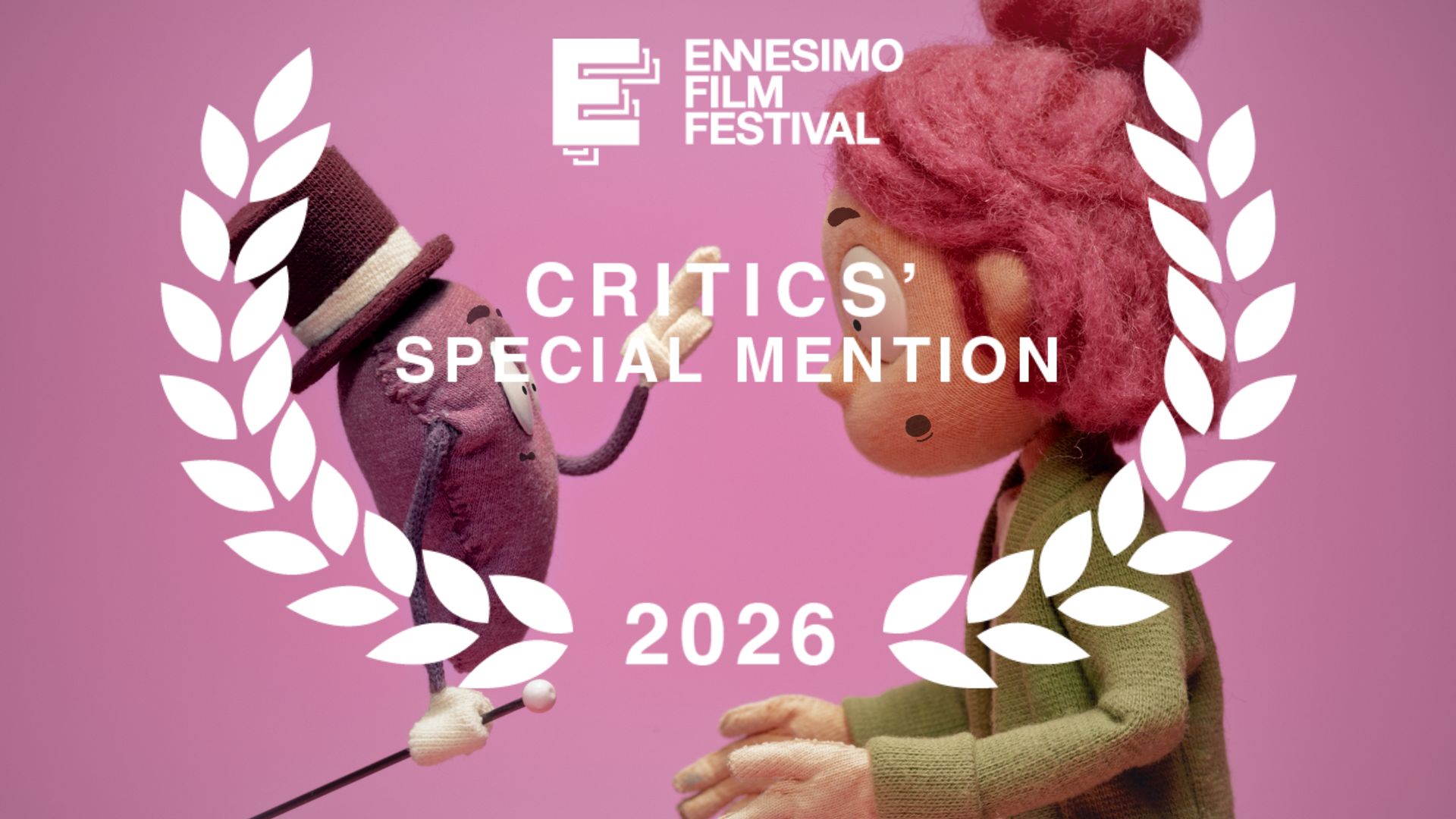
The jury also awarded two Special Mentions
For the all-round quality of its every creative and technical aspect; for its entertaining, original, and engaging way of addressing expectations inevitably faced by half of our society; this film makes accessible to a wider audience a discourse endured daily by many women.
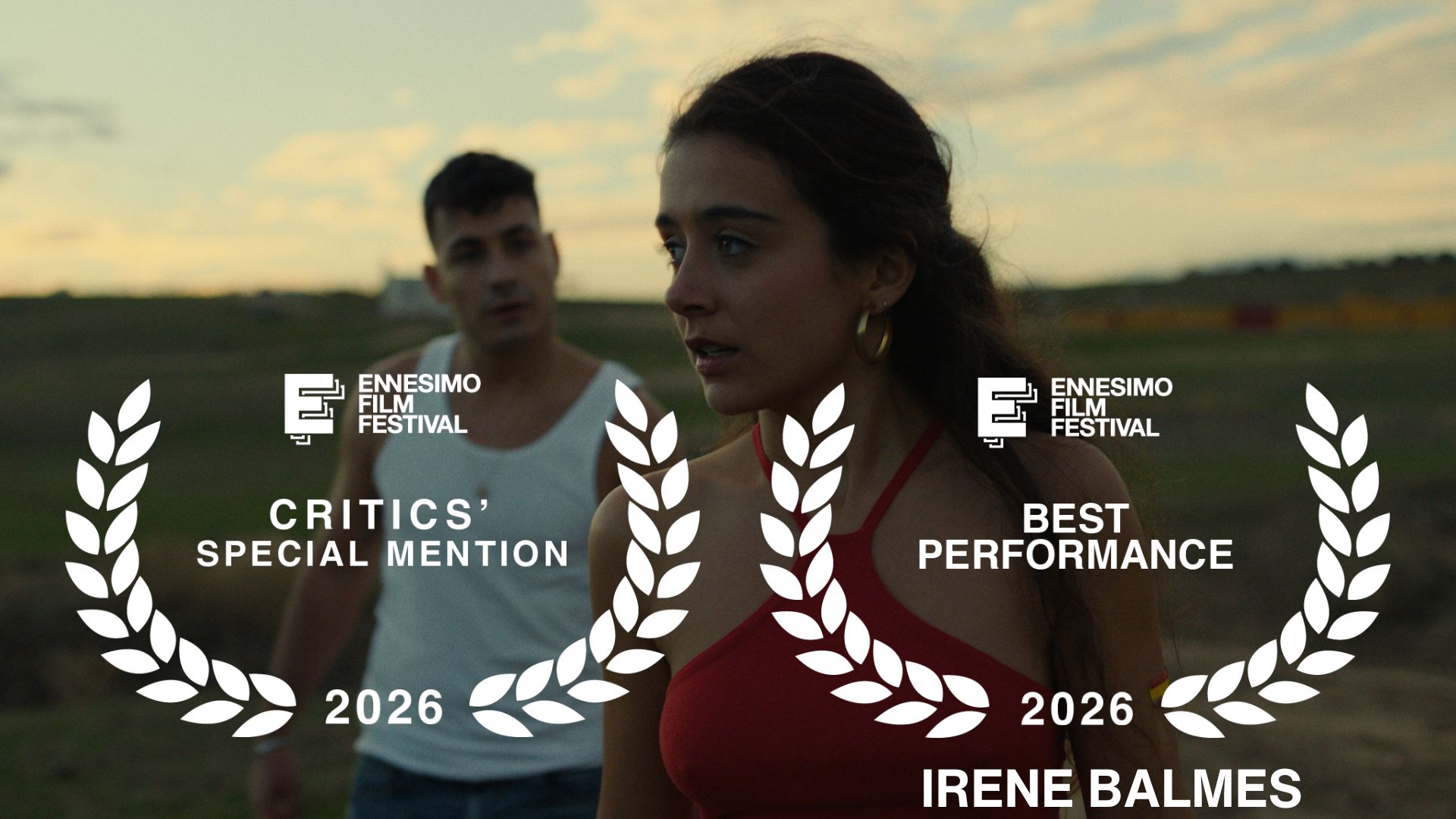
The second Mention went to the Spanish film
Crazy for You by Greta Diaz Moreau
In this film, the author’s strong stylistic imprint is evident, creating an incisive and authentic world of a teenage girl, exemplifying how art can act as a channel for catharsis, leading to a finale in which the protagonist and her unlikely ally unite in their revenge.
The Spanish film Crazy for You also received one of the two awards that director Claudio di Biagio chose to bestow as judge for the Best Performance Award.
The award goes to Irene Balmes: For the entire world she brings to life through her performance; within that world, she moves beautifully, guiding the emotions of a curious and passionate character who displays a natural naivety and the eyes of a young woman learning a precious yet brutal piece of life. A performance that manages to remain deeply human right up to the grotesque and extreme final gesture
The second Best Performance Award assigned by director Di Biagio went to:
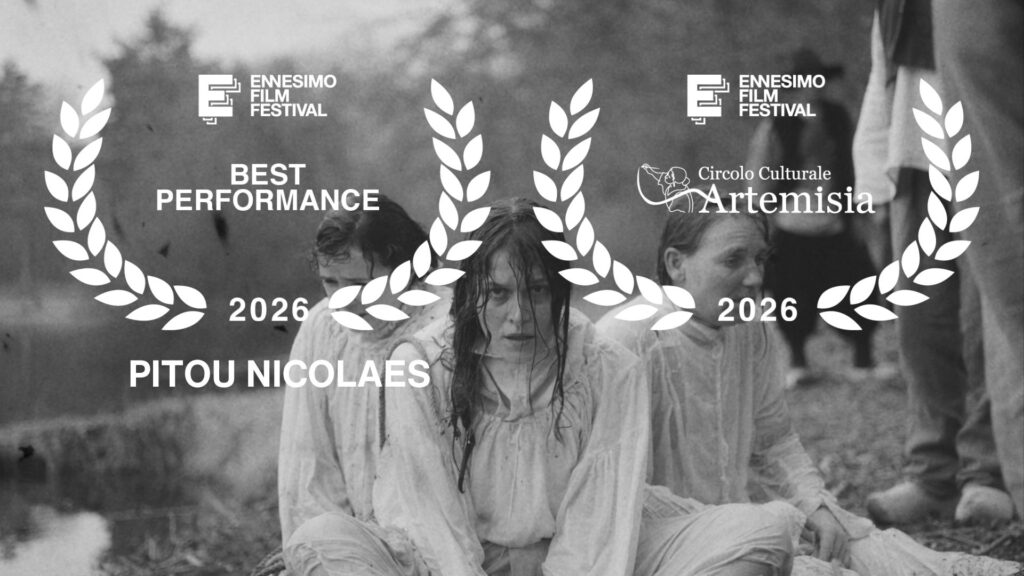
Pitou Nicolaes (lead actress of Barlebas) for being exactly what her character needs to be in every single frame. Alive and fully immersed in her time, in the songs, and in the physical and emotional pain, as well as in the silences and glances. An acting performance of significant physical and psychological weight that gives the audience the perfect tone for the film.
The Artemisia Prize was awarded to the same film
The final days of young Heylken’s life, just as she is about to leave her village for good. Heylken feels her neighbors turning against her and soon finds herself accused of witchcraft. A period drama set in the south of the Netherlands at the end of the 16th century, wrapped in a powerful horror atmosphere.
A chilling look at the persecution of witches. The film intensely captures this moment, balanced between the awkwardness of those who dare not look and remain on the sidelines, and the arrogance of the accusers who cannot accept the young woman’s transformation and her freedom of speech and thought. The beautiful black-and-white cinematography, dark and mistry landscapes, and gothic score make the narrative deeply unsettling, leaving the viewer emotionally invested. The depictions of the villagers’ daily life are striking, and the image of ash drifting through the sky from the very first scenes is highly evocative. Several close-ups of Heylken and young Griet recall the chiaroscuro of Rembrandt’s portraits.
Particularly noteworthy is the relationship between Heylken and little Griet: their closeness, simple gestures, and the pain of loss. Heylken serves as an exemplar for Griet; her free spirit and powerful voice become a profound source of inspiration. Heylken’s final words are “My song will not cease,” and it is little Griet who will carry her legacy forward as an ode to the voices of women—all women who rebel against physical and psychological violence, against the twisted minds of those who try to tame them, and the reckless acts of those who believe they can stop a woman with her death. “You will not take away my pride,” Griet sings, kneeling at the church altar, and so it shall be, forever.
For the youth selection, we had 2 prizes chosen by the roughly 600 students who participated in the screenings:
Ennesimo COMIX Award, to Candy Bar di Nash Edgerton

the Youth Prize to When I Get Rich di Lucas Camps
City of Fiorano Award to América di Javier Arias-Stella
FuoriFuoco prize to Inadapté di Tristan Zerbib
Vision from Sardinia to Una Faccia da Cinema di Alberto Salvucci
Sinophinies Prize to Xing Long di Xin Alessandro Zheng
With the presentation of the Ennesimo Awards, the curtain falls on the eleventh edition of the Ennesimo Film Festival—a year that made us rediscover the wonder and excitement of “first times” through the eyes of directors, juries, and an extraordinary, warm audience. The winning films of 2026 are not only works of the highest technical and creative standards, but true mirrors capable of reflecting the complexity of our present and sparking urgent, necessary debates.
A massive thank you goes to all the filmmakers who chose our screen to give voice to their stories, to the juries for their invaluable and meticulous selection work, and to you, the audience, who continue to make Ennesimo a vibrant, shared, and collective experience.